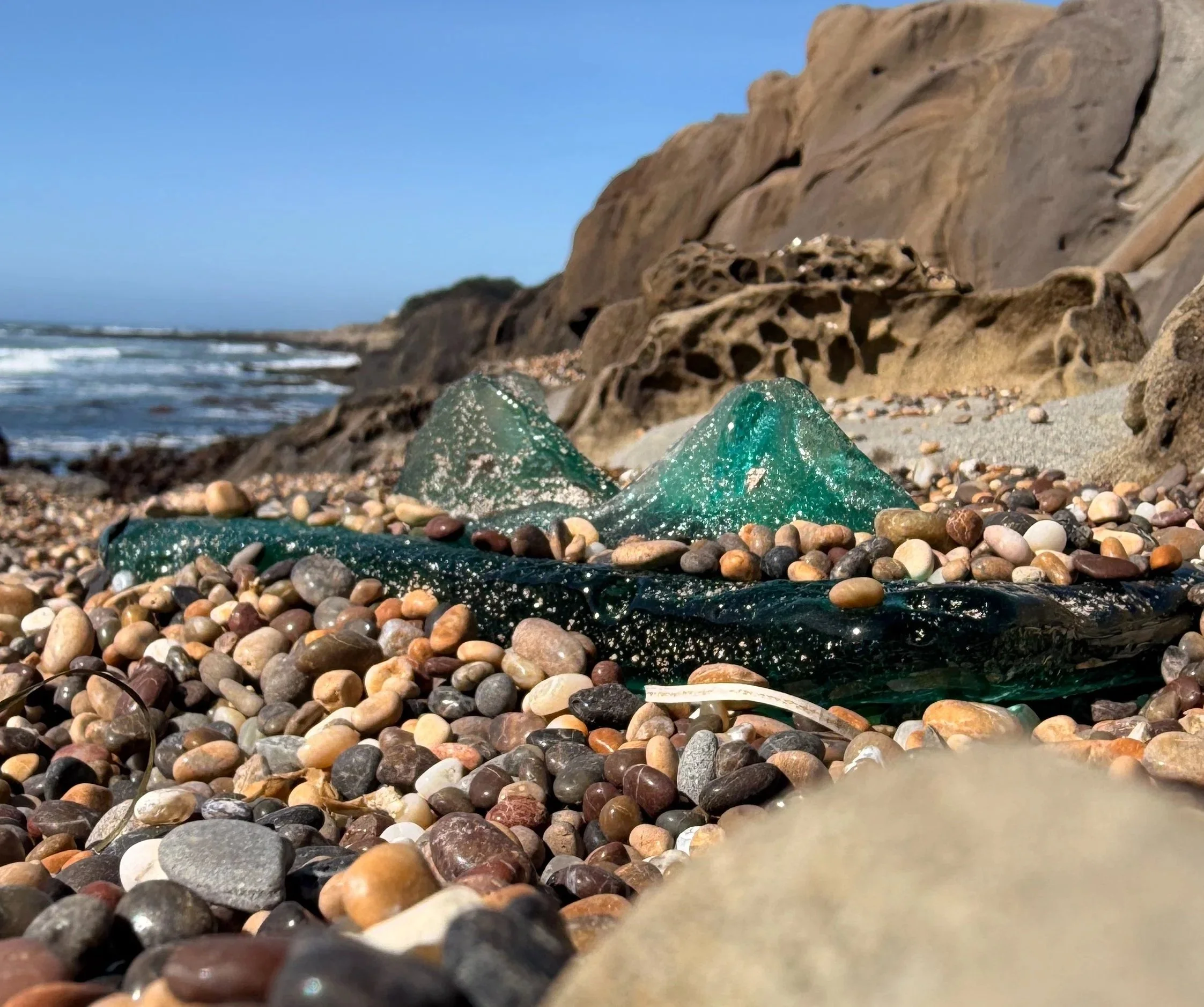
The Gable serves as a translucent monument to the structural memory of home. In architecture, the gable is the triangular portion of a wall between the edges of intersecting roof pitches—a symbol of shelter, stability, and the fundamental silhouette of a dwelling.
In this work, the gable is reimagined through the radical transformation of sand-casting. The sharp, peaked edges carry the grit of the shoreline, fossilizing the "invisible labor" required to maintain the boundaries of a home. By placing this architectural fragment against the scale of the eroding cliffside and the rising tide, the work explores the tension between the permanence we seek in our structures and the inevitable "unraveling" brought on by time and displacement.
It is a form that is both fragile and enduring—a refractive threshold that holds the light of a memory even as the landscape around it shifts. Here, the "rupture" of the casting process gives way to a quiet grace, suggesting that while the physical house may be left behind, its geometry remains embedded in the spirit of the maker.
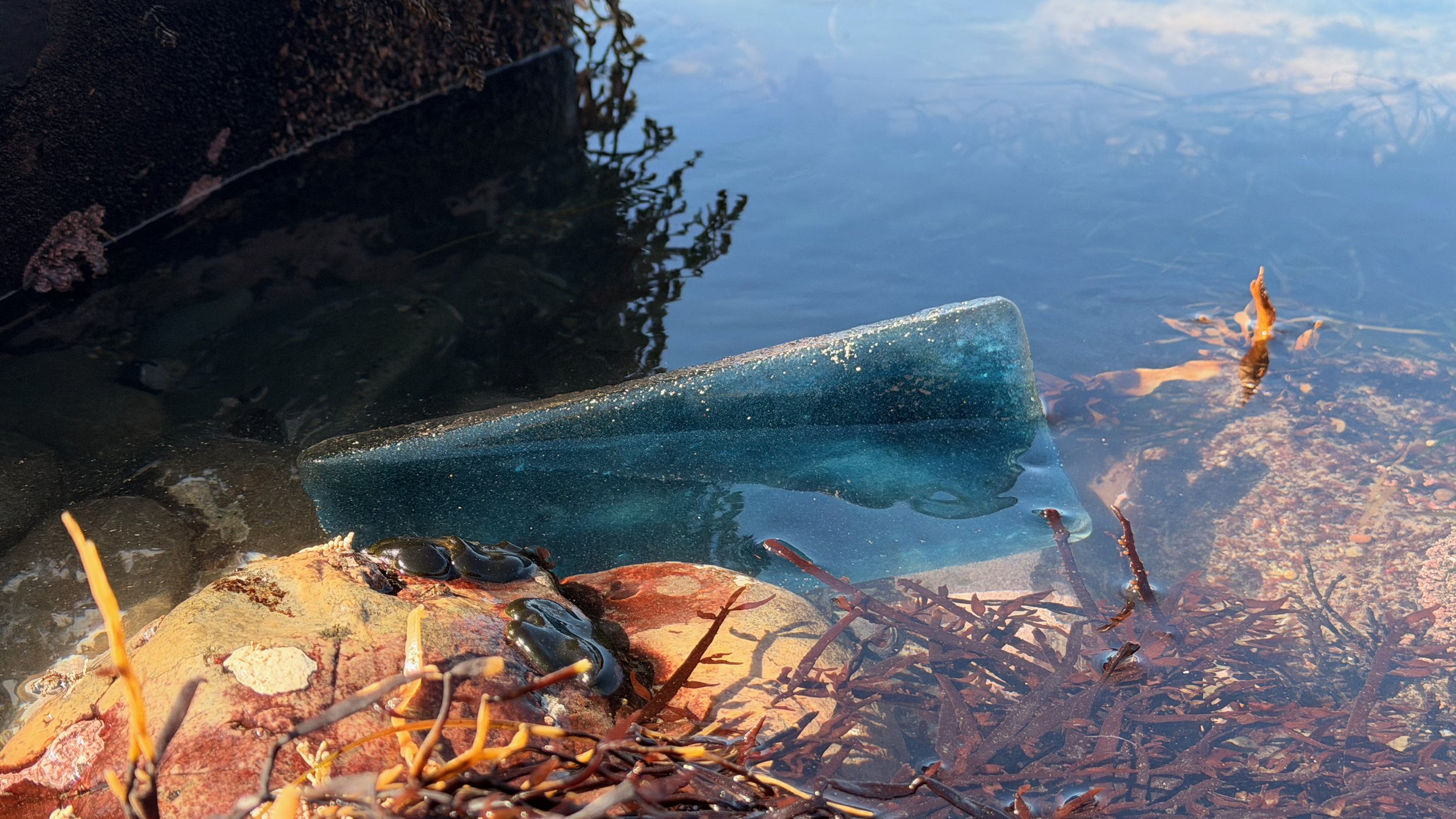
In The Weight of Holding, the domestic wall is reduced to a single cerulean brick, mostly swallowed by the tide. This work speaks directly to the "intimate labor" of care—the heavy, often invisible work of maintaining a foundation while the environment around it shifts or floods.
Unlike the other more vertical, "becoming" forms in this series, the brick represents a profound state of anchoring. It is an architectural fragment that has survived a rupture; it is scarred by the sand-casting process, yet its color remains vibrant—a "pellucid" blue that suggests clarity found even in the depths of grief.
In submerging this vitrified brick, I am mapping the threshold where the heavy labor of memory meets the buoyancy of grace. A brick is the smallest unit of a home, yet here it exists in isolation—an architectural fragment caught in the wash of a changing tide. The water does not erode the form; instead, the glass holds its ground, magnifying the grit of its own making. It serves as a testament to the way we remain anchored by our histories, even when the foundations of our lives are partially obscured by the weight of displacement.
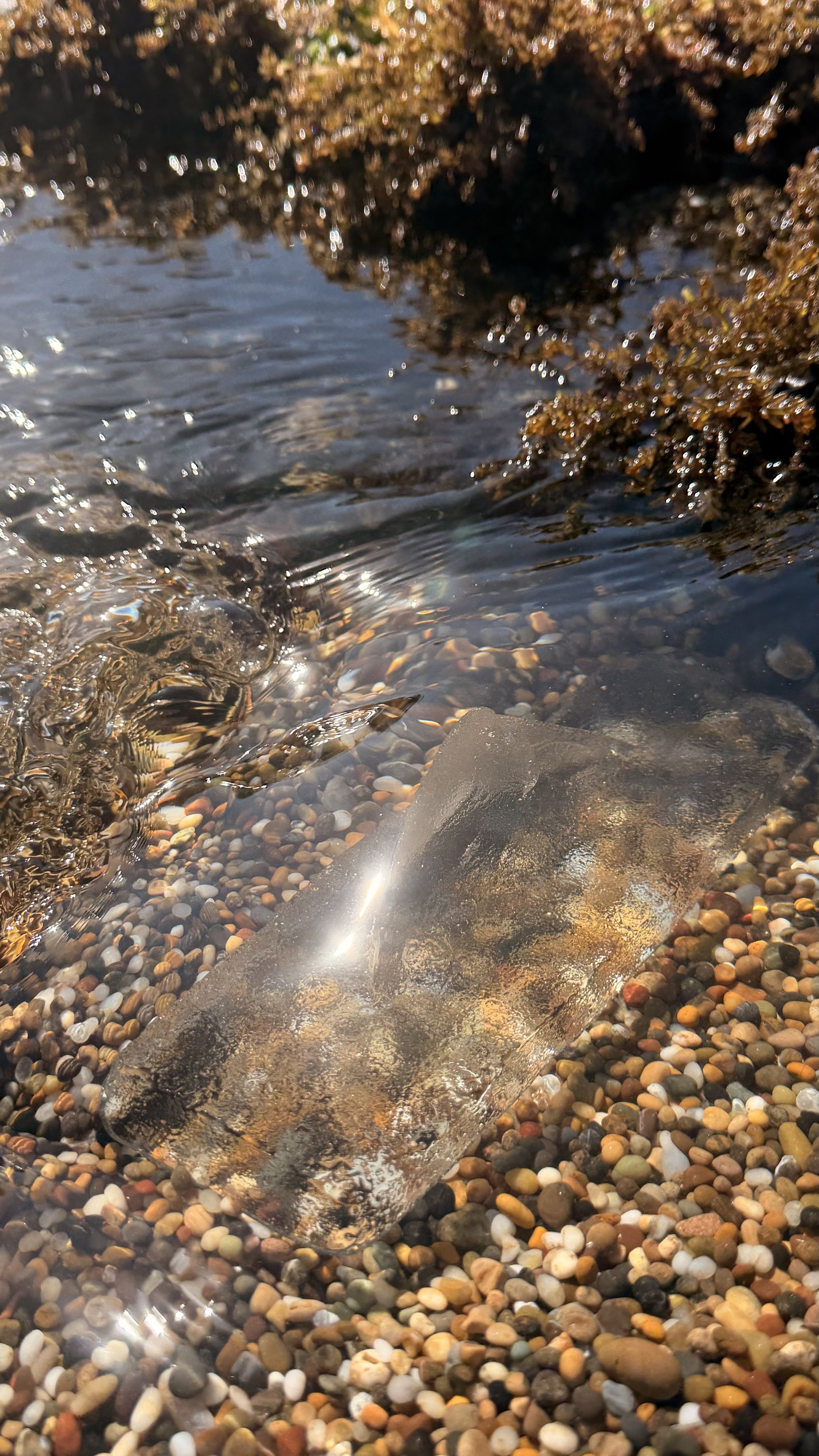
In this work, the glass exists as a literal and metaphorical anchor. While the surrounding tide is in a constant state of "unraveling"—moving, foaming, and shifting the pebbles below—the glass remains resolute. It represents the quiet endurance required to stay grounded when the structures of one’s life have been broken apart.
The searing light reflecting off the surface highlights the diaphanous nature of the material. Like a jellyfish drifting through a pool, the glass appears almost biological—fragile, translucent, and permeable. This transparency suggests that clarity is not the absence of struggle, but a byproduct of it. The sand and grit trapped within the form are visible through the wash of the water, serving as a reminder of the "invisible labor" of transformation. This piece documents a threshold where the weight of memory finally meets a moment of stillness, illustrating how we find grace by leaning into the very forces that threaten to displace us.
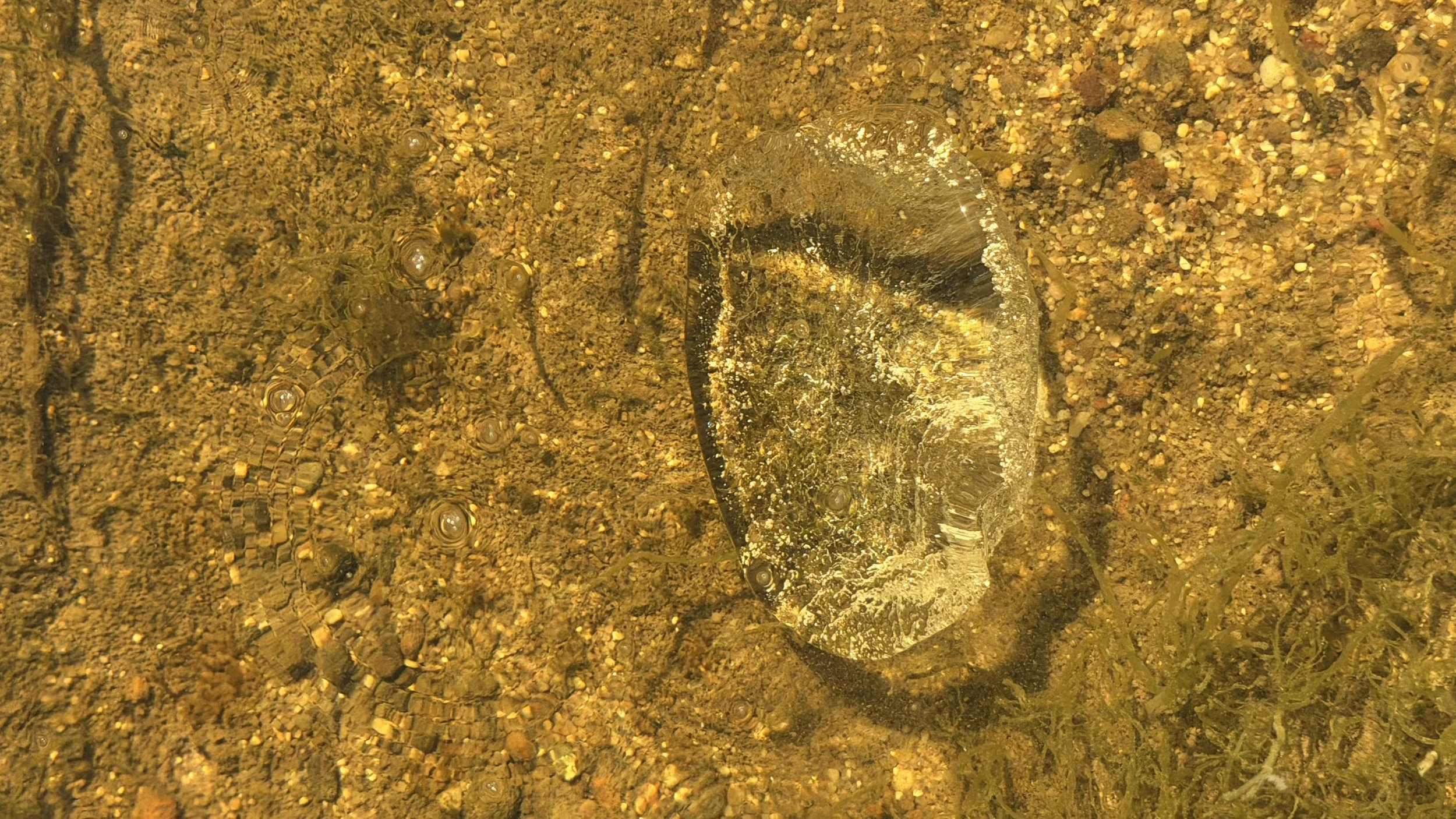
In Quiet Endurance, the boundary between the object and the environment reaches its most fragile point. The glass sits at the base of the pool, almost entirely camouflaged by the silt and the golden hue of the water. It represents the "invisible labor" that anchors a life—the essential, often unseen work that persists beneath the surface of a crisis.
This piece is the most diaphanous in the series; it mimics the liquid state of its origin, appearing less like a solid artifact and more like a captured breath or a pulse of light. It speaks to the stage of transformation where one is no longer fighting the current, but has become part of it. The "grit" here isn't a scar, but a bridge, allowing the glass to blend into the landscape. It is a testament to grace: the ability to hold one’s essence even when the external world threatens to wash over and obscure us entirely.